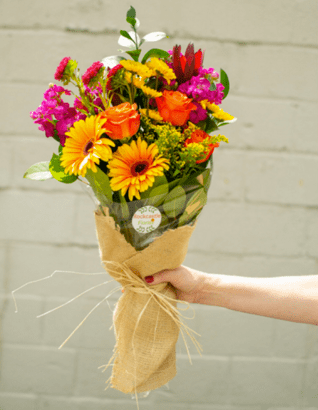
There is an art of gift-giving in France; faire un cadeau is an exquisite, gracious gesture built into the French lifestyle, etiquette, and savoir-vivre. For example, it is still considered lacking manners to show up at someone’s house as a guest “Les mains vides” or empty-handed without a little something to bring for the hostess: a bouquet of flowers (avoid chrysanthemums which are for funerals, red roses for lovers, and carnations considered bad luck) a good bottle of wine, liquor or French champagne, a box of fancy chocolates, or some bonbons or pâtes de fruits for the children of the house.
BYOB is perhaps accepted by the younger generations for a BBQ, for example, but I have yet to see a guest bring their own bottle of their favorite drink to consume in a French home. That would be plain rude and would surely raise a few disapproving eyebrows. A good bottle of wine or French champagne to share at an apéritif is always a good idea.
The French customs of giving gifts have an old-school and modern approach. Personally, I think that the French art of gift-giving is more subtle and thoughtful than casual gift-giving in the US. A gift from a close friend is usually a well-thought-out gift, often a little treasure that will be cherished and kept for a long time, like a pair of unique artisanal earrings, or a keepsake like a leather Agenda. I also fondly remember that little red leather manicure set, which my best childhood friend gave me when I was ten years old as a farewell gift on the eve of the trip to America.
Overall, gifts in France have a very personal and traditional connotation unless, of course, the gift is business work-related or for a specific function or event. A gift is a gesture of appreciation, love, and comes from the heart to please the other person. Although it’s indeed the thought that counts, please, do not give your sweetheart perfumed soap as a gift, as this is an item that the French consider more generic and for older family members, such as your sweet auntie or grandma. (of course, Savon de Marseille has become quite a fancy, popular, go-to luxurious item now in the US)
In general, in France, there is no specific ritual of gift-giving, and gifts are not always expected aside from traditional events such as a graduation, a promotion, a thank-you gift, a baptism, a wedding, or an end-of-year gift. The holiday season is the occasion to be more gift-oriented than other times of the year, and I have noticed that French gifts are mostly sentimental value compared to the monetary value. For instance, a son may give his mother as a special gift her traditional expensive French Perfume, or his dad his favorite old-aged Armagnac; most gifts are more practical and thoughtful of the person’s likes and personality.
I’ll always remember how, one Christmas as a little girl, our adoptive US grandma came to spend the holidays at our apartment. She was quite wealthy, and I remember fantasizing about all the expensive gifts we would probably receive. Instead, I learned and was reminded of an important lesson. It is not about the value of the gift but the thought! That year, Grandma Lynne gave both my sibling and me a red stocking filled with mandarins and nuts, a memory I will always treasure and a tradition now in our home.
French elegance and lifestyle are in the details. I remember how, for Christmas Eve or Le Réveillon de Noel, for example, we would place a little token gift wrapped with gold or silver ribbons in the guests’ plates en cadeau d’assiette, or how we would leave our slippers or chaussons, the French version of the Christmas stockings, under the tree for Saint Nicolas, our French Père Noel. (But more to come on these traditions in an upcoming post.)
If you’re looking for some inspiration for a last-minute French gift idea, you may want to check out our updated French-Inspired Gift Guide.
© Copyright 2020 French A L.A Carte Blog
French Culture & Lifestyle in the USA
Discover more from French A L.A Carte Blog USA
Subscribe to get the latest posts sent to your email.

